
A customer or a client needs a status update, an invoice, or an answer, and it has to wait for you specifically to be online, even for something Ziroo already knows the answer to.
One workspace, every team
Every team, one live space, no private threads with an agent CC'd in.
Join the waitlist
Use cases hero graphic placeholder
Replace from the WordPress editor
Leadership
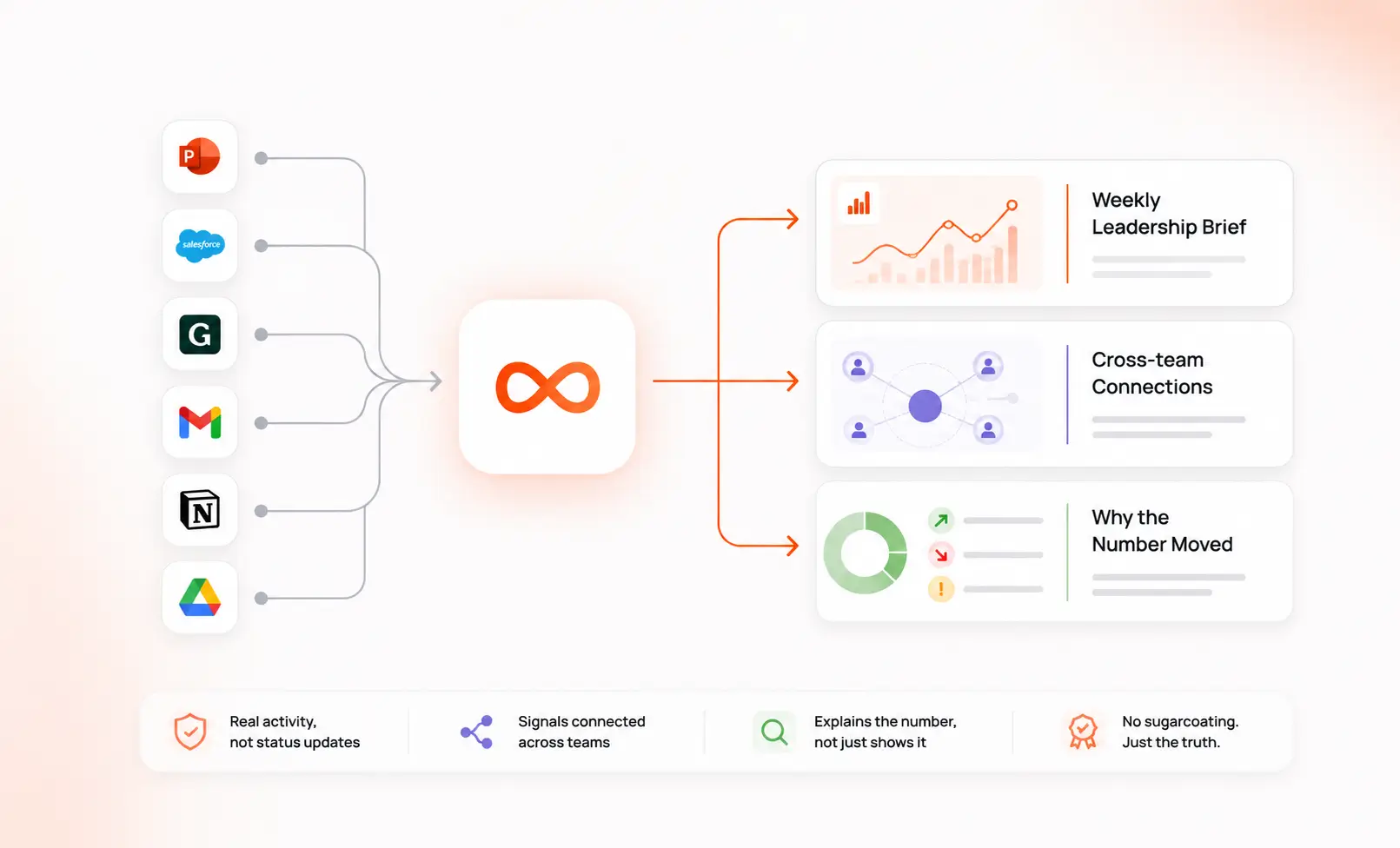
The report built from what actually happened, not what people remembered to write down.
Pulls the real week from every space, not a status update someone typed from memory
What actually moved in Marketing, Finance, Support, and Sales, cross-referenced, not self-reported.
Surfaces the thing three teams each half-noticed and nobody connected
Support saw a sizing pattern. Finance saw a margin drop on the same product. Ziroo connected them and said so to the person who owns the product overall.
Explains the number instead of just showing it
Revenue moved. Ziroo does not stop at the chart. It names the specific campaign, product, or vendor issue behind the movement.
Never smooths over a bad week to make the report read better
If three things went wrong, the report says three things went wrong, with the same weight as the two things that went right.
Marketing
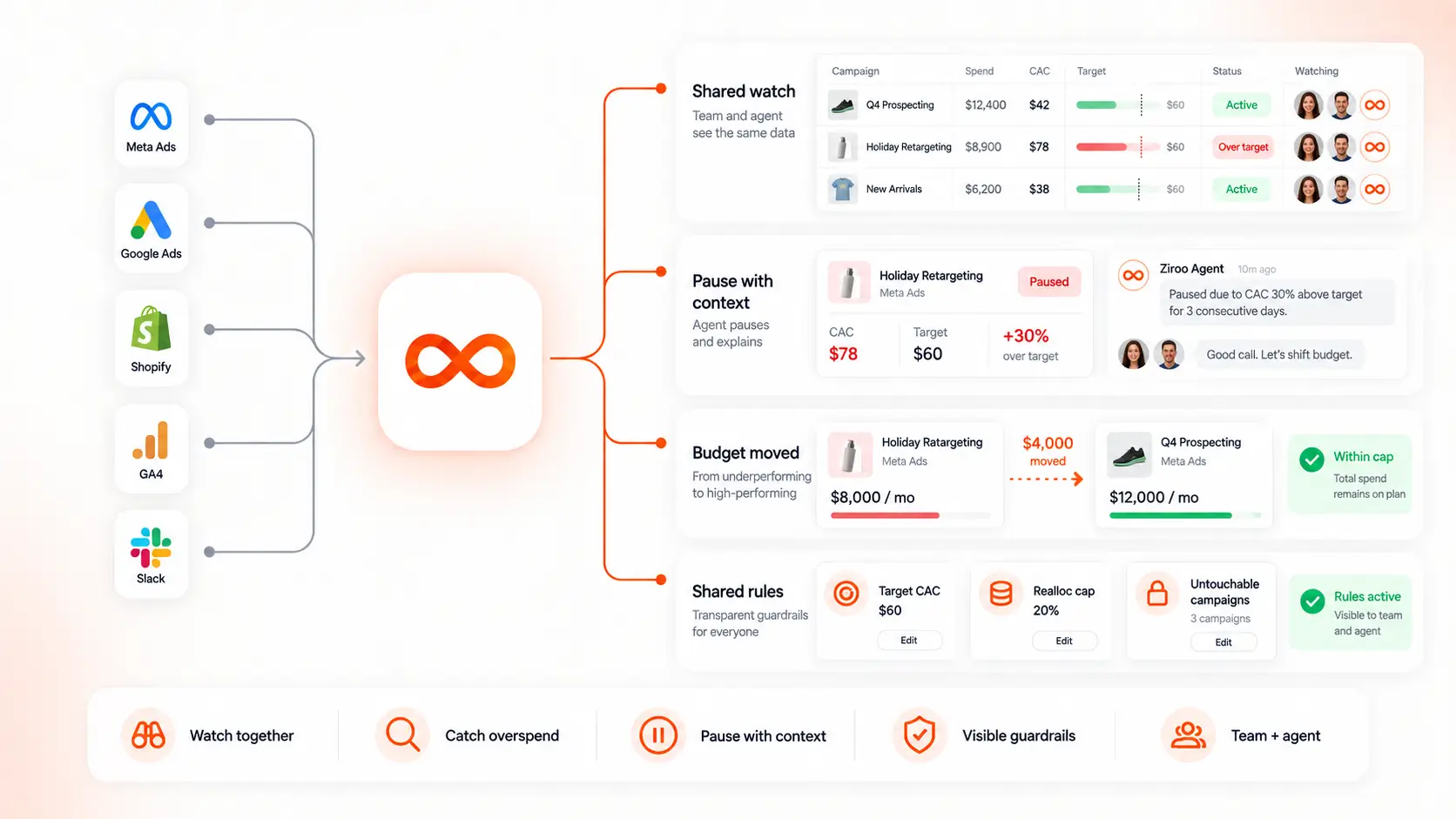
Ziroo is where your team and your agent work the campaign together, so spend does not just get watched, it gets caught in time.
Campaigns, watched by everyone who owns them, not reported to one person after.
Ziroo checks every active campaign against target CAC daily, in the same space Marketing already works in. When something crosses the line, the team sees it the moment it happens, not in a message sent afterward.
Pausing an ad set is a decision the room makes, not one Ziroo makes alone.
When a campaign trips the threshold, Ziroo pauses it, reallocates the freed budget, and posts why into the space, in time for someone to say “wait, that one is a brand test” before the next campaign gets touched, not after.
The limit is a rule the whole team set, not a setting only one person knows about.
Daily reallocation caps and untouchable campaigns are visible to everyone in the space, so nobody is surprised by what Ziroo did or did not do.
Sales
The deal that is not actually stalled, and the one that is.
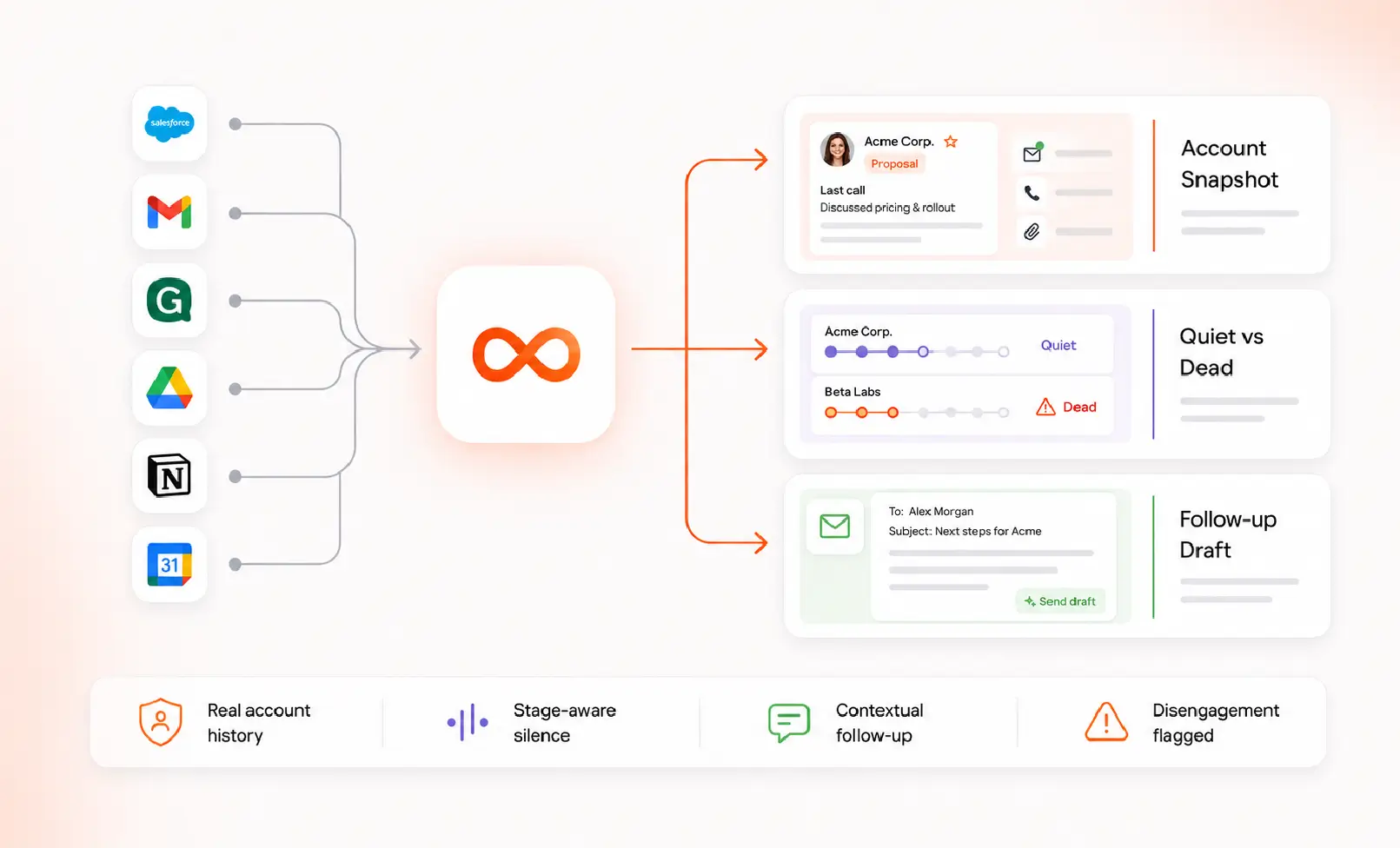
Builds the account snapshot from what actually happened, not a CRM field someone forgot to update
Real emails, the real last call, the objection that was actually raised, not “stage: negotiation” sitting untouched for six weeks because nobody updated the pipeline.
Tells the difference between quiet and dead
A deal gone quiet three weeks after a first email means something different than three weeks of silence after a signed proposal was sent. Ziroo flags against the deal’s own stage.
Drafts the follow-up that references the real conversation
Not “just checking in,” the actual objection they raised and what was offered to address it, so the follow-up reads like someone who was in the room.
Catches the deal your team thinks is fine and is not
A prospect kept replying fast, which read as engaged. But every reply was shorter than the last, and the calendar invite for a next call kept quietly moving. Ziroo flagged the disengagement pattern.
Support
The pattern nobody sees until it has already cost you a batch of returns.
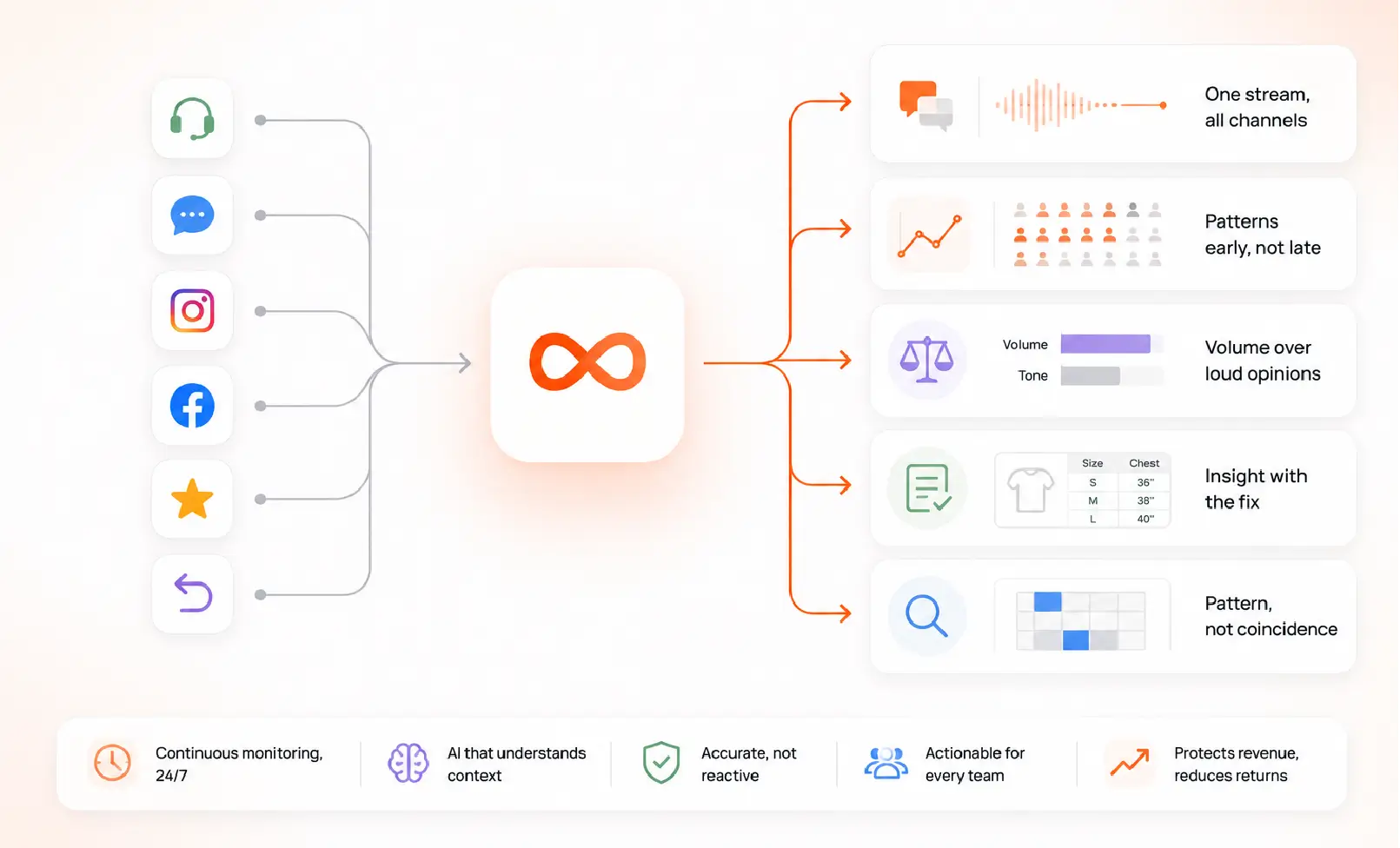
Reads every complaint channel as one stream, not four separate inboxes
Tickets, reviews, DMs, and return reason codes, read continuously as if they were one conversation, because to the customer they are.
Catches a pattern before it is obvious, not after it is expensive
19 of 23 returns on one product cited the same sizing complaint inside 11 days. No single ticket looked urgent, but together they were a size chart that had been wrong for two weeks.
Separates the loud complaint from the real one
A one-star review with three exclamation points does not automatically outrank eleven quiet returns with the same stated reason. Ziroo weighs volume and repetition, not tone.
Shows up with the fix built, not just the bad news
The finding went to Product with the return data behind it, and a corrected size chart already drafted from the actual measurements customers were reporting.
Knows exactly which returns are a pattern and which are a coincidence
Ziroo checks whether returns cluster on one warehouse batch or one photo angle before it calls something a pattern, so Product is not chasing a false alarm.
Operations
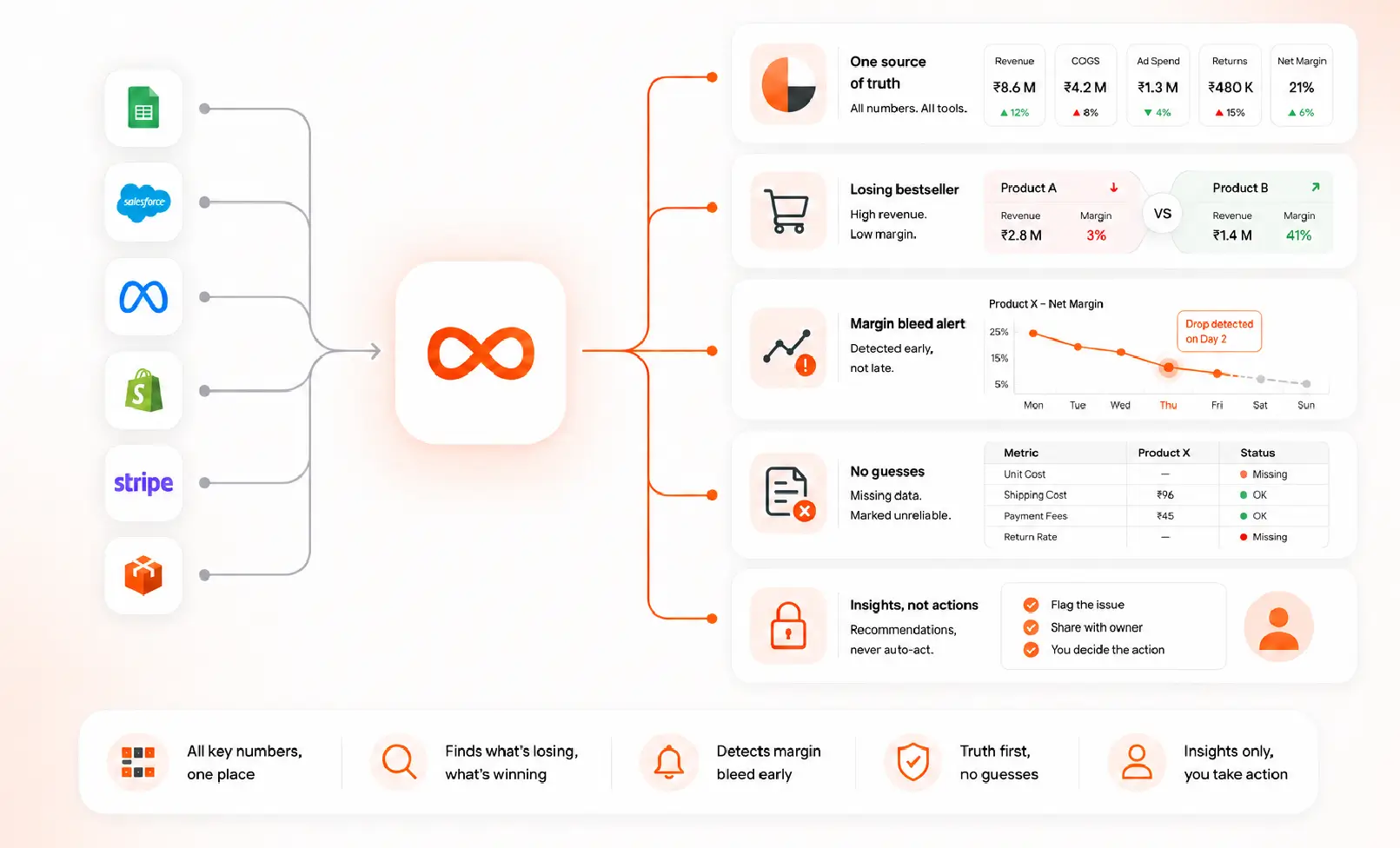
The number your revenue dashboard is quietly lying to you about.
Pulls together five numbers that live in five different tools
Unit cost from your inventory system, ad spend from Meta and Google, shipping cost from your fulfillment provider, payment processor fees, and returns, netted against revenue per product, every day, not reconstructed by hand once a month.
Finds the bestseller that is actually losing money
Your top product by revenue this quarter looked like a win. Once ad spend, a return rate creeping past your average, and gateway fees were netted out, real margin was 3%, against 41% on a product selling half as many units.
Catches margin bleeding out before it is a pattern
A single SKU’s margin dropped for four straight days. Ad spend on that product had not changed. Its return rate had, quietly, for a reason nobody had connected yet. Flagged on day two, not discovered at quarter close.
Refuses to guess, and says so out loud
If unit cost is missing for a product, that product does not get a number, it gets marked unreliable, with the specific missing input named.
Never touches pricing or spend on its own
Every other space closes what it can inside a limit you set. This one never does, because a margin call changes how you think about a product, not just whether a payment clears.
Finance
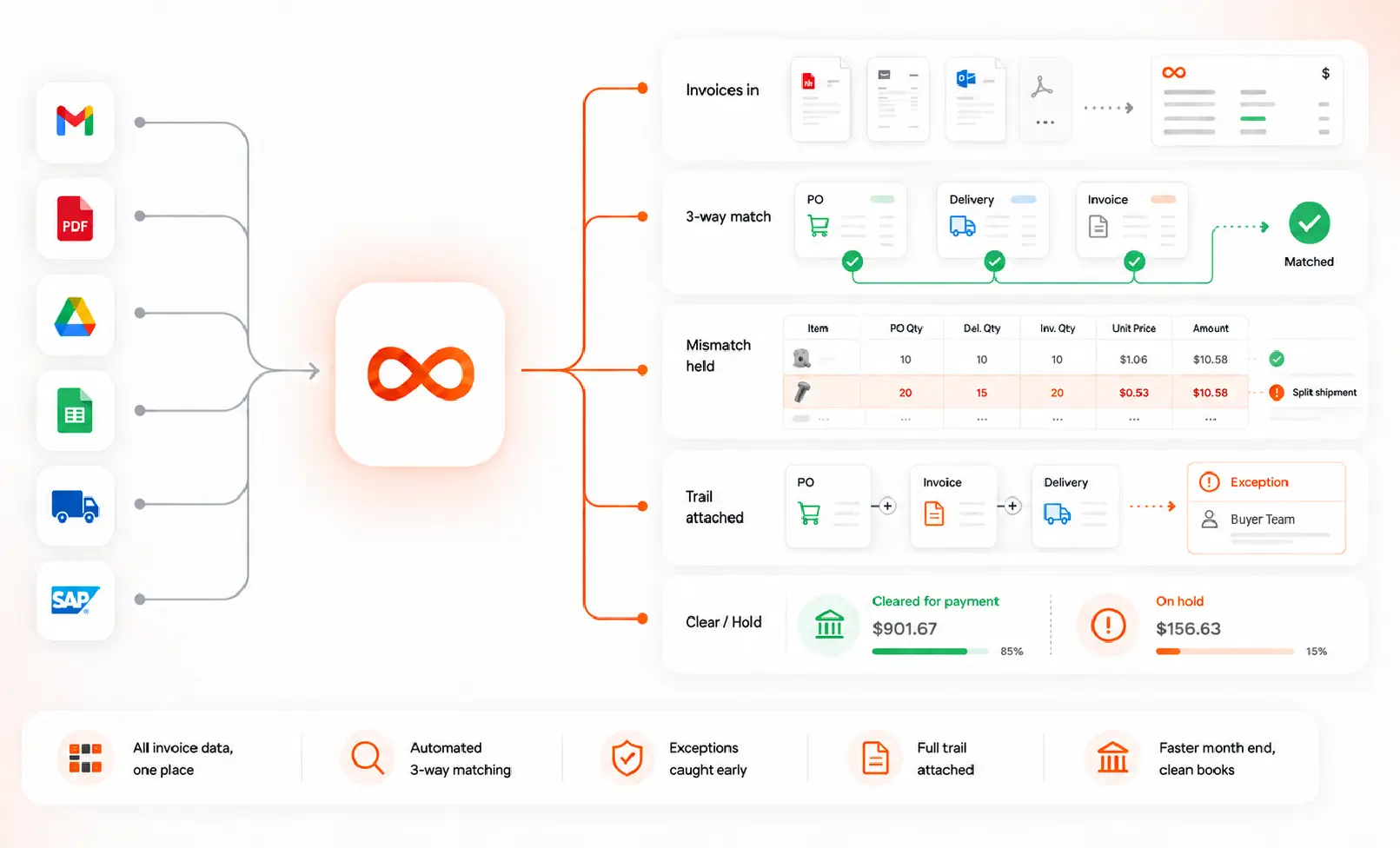
Invoices cleared, mismatches held, and the whole trail attached before finance opens it.
Ingests invoices from anywhere they land
Email attachments, forwarded PDFs from a warehouse manager, a scanned document dropped in a shared folder. 41 invoices this month, 3 different formats, 0 manual re-typing.
Cross-references three systems that were never built to talk
The PO sitting in your procurement sheet, the delivery confirmation logged by whoever received the shipment, and the actual invoice line items. A vendor billing in a different currency, rounding differently, or bundling two POs into one invoice, still gets matched correctly.
Catches the mismatch a human would only find on the fifth read
One vendor billed across 14 line items. Delivery confirmed 13. The 14th was split across two partial shipments logged three weeks apart under different reference numbers. Ziroo caught the split, held the portion tied to it, cleared the rest.
Routes the exception with the whole trail attached
Not “this invoice does not match.” The actual PO, the delivery logs, and the specific gap, sent to whoever owns that vendor relationship, so resolving it takes minutes instead of an afternoon spent hunting through three different tools.
Productivity
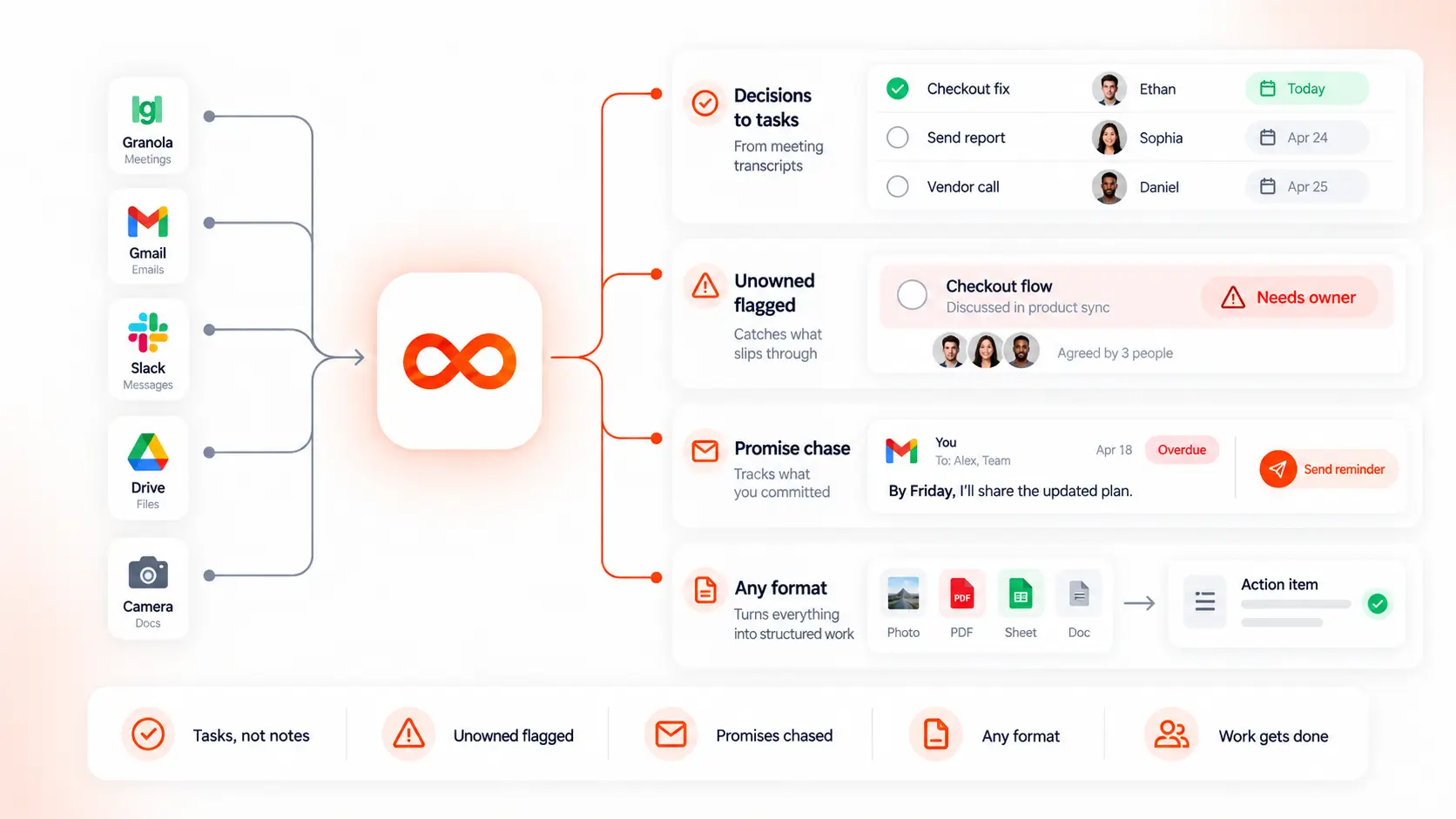
The meeting that actually turns into work, not a summary nobody reads.
Turns a transcript into owned tasks, not minutes
Separates what was decided from what was just discussed. A task only gets created if someone actually said “I’ll do this by Thursday,” not because the topic came up.
Catches the task that got agreed to but never assigned
Three people nodded when someone said “we should fix the checkout flow.” Nobody said whose job that was. Ziroo flags it as unowned rather than silently assigning it to whoever spoke last.
Chases the thing you forgot you promised
Reads your own sent messages, not just what is owed to you. If you told a client “I’ll have that by Friday” and Friday passed with nothing sent, Ziroo says so before the client has to ask.
Standardizes whatever format shows up
An invoice as a photo, a contract as a scanned PDF, a spec sheet as an Excel export from someone else’s system, all logged the same way regardless of how it arrived.
People
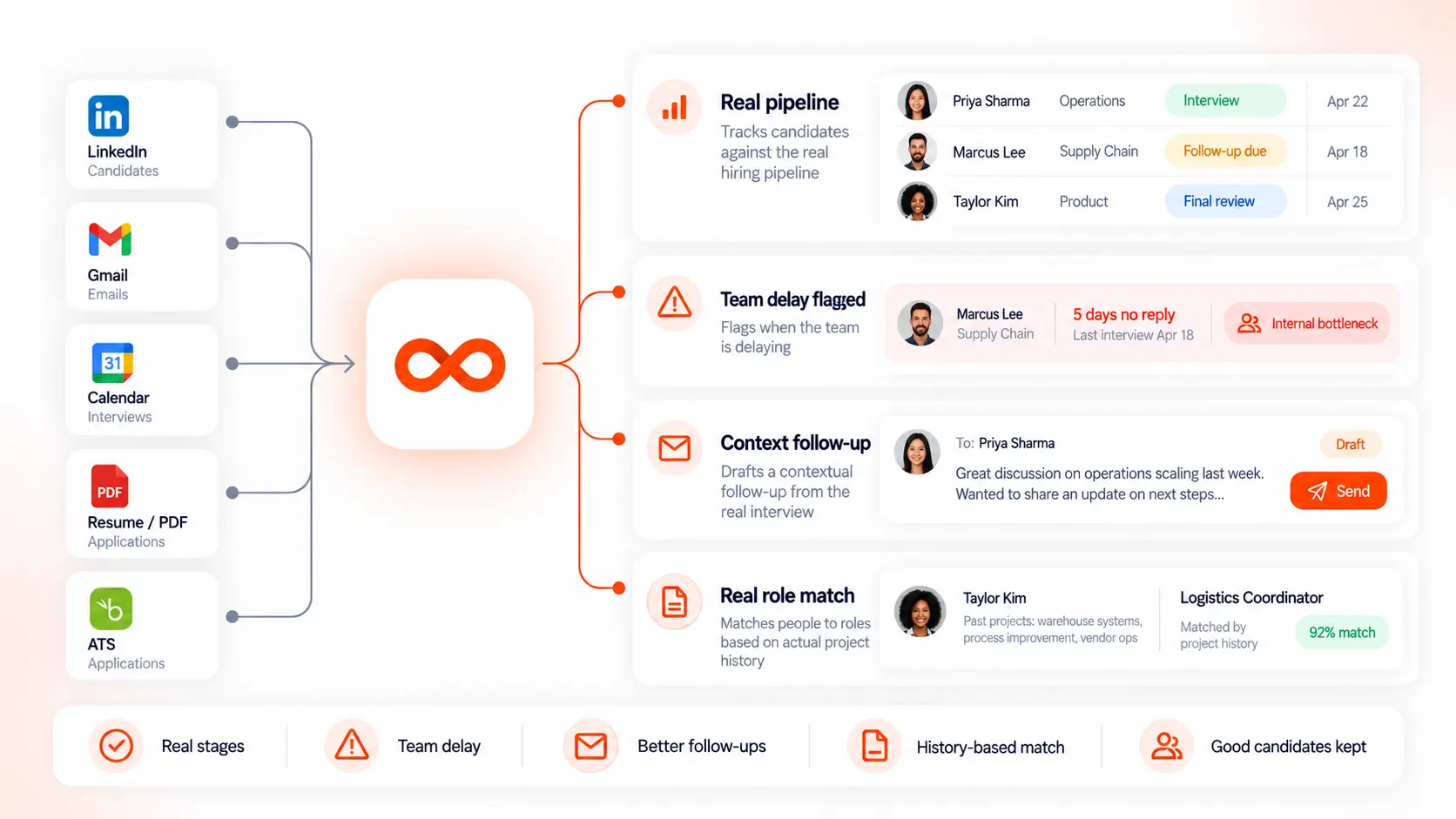
The candidate you almost lost because your own team went quiet.
Tracks candidates against your actual pipeline, not a generic checklist
Where someone really is, not where the tracker says they should be by now.
Flags your team’s delay, not the candidate’s silence
A strong candidate went five days without a reply. It was not her. The hiring manager had the follow-up sitting in a queue. Ziroo flagged the internal bottleneck, not “candidate unresponsive.”
Drafts the follow-up from the real interview, not a template
References what was actually discussed and what she actually asked about, so it does not read like the fortieth templated nudge she has received this month.
Matches people to roles on real project history, not keyword search
A resume that does not say “logistics” but describes exactly that work for two years should not get filtered out by a keyword scanner, and does not.
Knowledge
The answer that already exists, three tools ago.
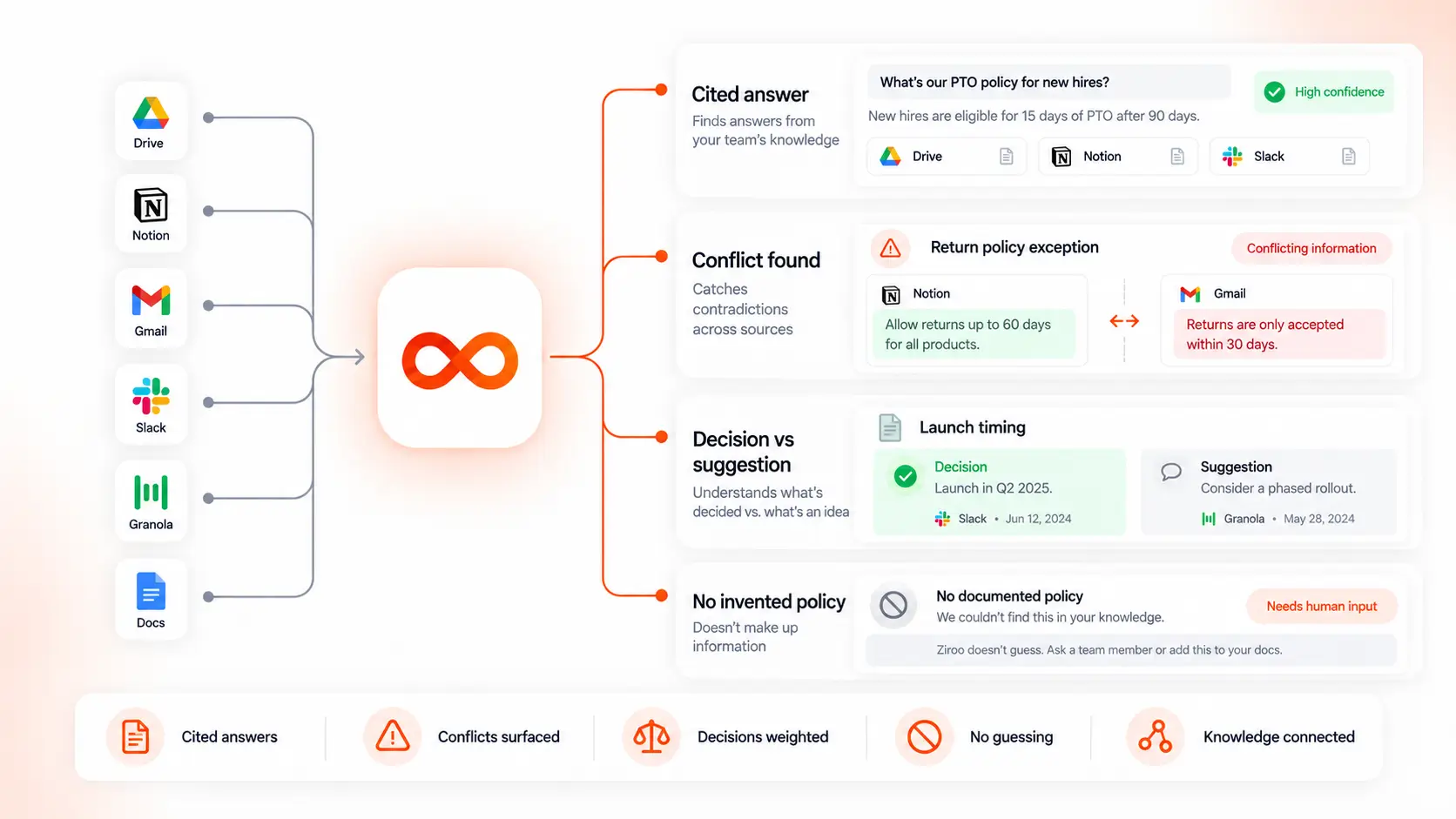
Answers from everything your team already knows, cited
Not a guess dressed up as an answer. If the source is thin, it says so, and shows what it found instead of filling the gap with something plausible-sounding.
Catches the answer that contradicts an earlier one
Someone documented a return policy exception in one place, a different exception in another, six months apart. Ziroo surfaces the conflict instead of confidently picking one.
Knows the difference between “we decided” and “someone suggested”
A brainstorm from four months ago does not get treated with the same weight as an actual decision made in a real meeting, even though both live in the same knowledge base.
Never invents a policy that does not exist
If nobody has documented what happens when a customer asks for X, it says nobody has documented that, rather than generating a confident answer that becomes policy by accident.
Customers in the shared space
Your customer gets the answer, without waiting for you to be online.
You can invite a customer or client directly into a shared space with Ziroo. They ask their own question, order status, invoice copy, or where a return stands, and Ziroo answers from the same real data it works from internally.
Customers only ever see what you have explicitly given that space access to. Anything sensitive, internal margin, another client’s data, stays outside what they can reach by design.
How it works
Same workspace. Shared memory. Work moves both ways.
Invite Ziroo into a space
Marketing, Finance, Support, a client account, whatever the work actually is.
Connect the tools that space runs on
Meta Ads, Google Ads, Stripe, Razorpay, Shopify, your CRM. Every connection lets Ziroo act, not just read.
Set your limits once
Spend caps, payment match rules, refund thresholds. Ziroo works inside them from day one, and holds anything outside them for a person.
Security
Limits stay visible. Credentials stay protected.
Credentials never touch the model
Payment and ad account keys are injected at execution time by a backend gateway.
Money moves only inside limits you set
Ad reallocation caps, payment match requirements, refund thresholds, defined once, enforced every time, with anything past the line held for a person.
Customer access is scoped, not assumed
A customer invited into a space sees only what that space explicitly shares, nothing else Ziroo knows.
FAQ
Questions teams ask before giving Ziroo work.
Does Ziroo actually spend money, or just tell me to?
Both, depending on what you set. Ad budget reallocation and invoice payment can run automatically inside limits you define. Anything outside those limits is held for a person.
Can my customers really talk to Ziroo directly?
Yes. Invite a customer or client into a shared space and they can ask Ziroo questions and get answers from your real data, scoped to only what that space shares, whether you are available or not.
What stops Ziroo from paying an invoice that is wrong?
A three way match against the PO and the delivery record. If any of the three disagree, payment does not go out, it is flagged for a person instead.
Why does Ziroo act on its own in some spaces but not others?
It closes routine, reversible actions automatically, inside limits you set, in spaces like Marketing and Finance where the check is mechanical. In spaces like Data & Analytics, where the call is a judgment about the business, it always flags to a person.
Is this one agent or many?
One agent, Ziroo, working across every space it is invited into, Marketing, Finance, Support, Sales, Data & Analytics, Knowledge, Productivity, and any space you invite a customer or investor into. Same memory everywhere.
One Ziroo. Every Team
Bring your teams and customers in one shared workspace